
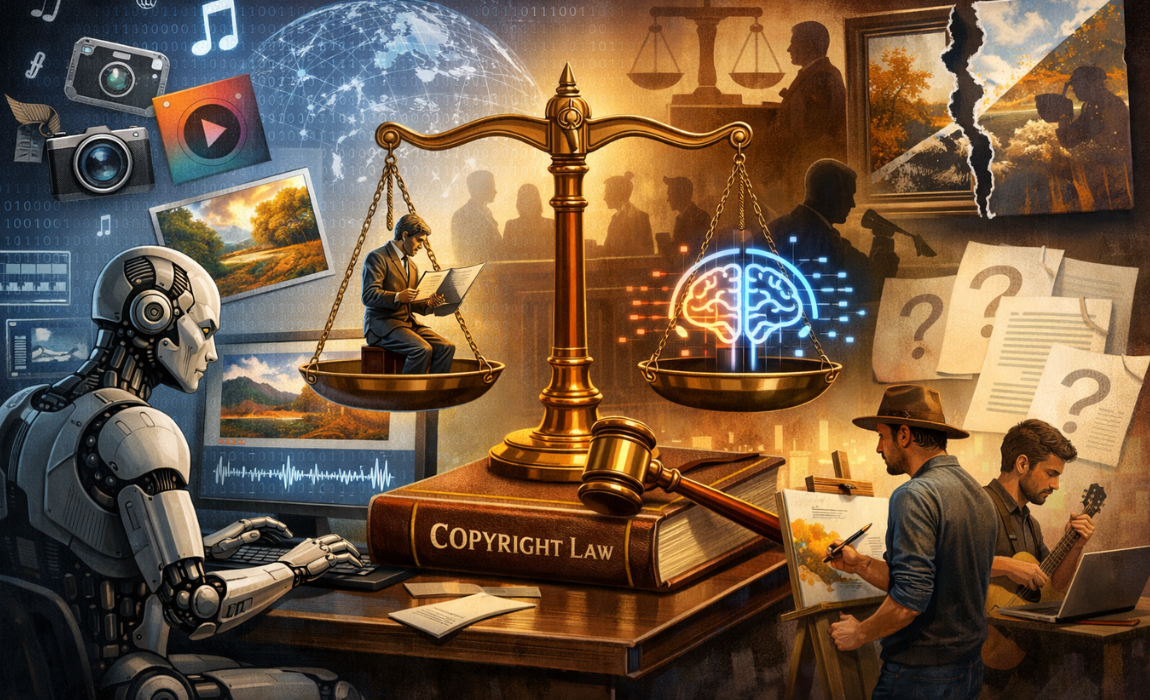
Al-Generated Content and Copyright Law Reform
Artificial intelligence is changing the way we create and consume content. From articles and music to images and videos, AI can now produce material that looks and sounds like it was made by humans. While this technology brings exciting opportunities, it also raises serious questions about copyright law. Current laws were written long before AI existed, and they are struggling to keep up with this new reality. It is time for thoughtful reform to protect creators, encourage innovation, and clarify legal responsibilities.
Copyright law was designed to protect the rights of human creators. It gives authors, artists, and musicians control over their work and the ability to earn money from it. But AI complicates this system. If a machine creates a piece of music or a painting, who owns the copyright? Is it the person who programmed the AI, the user who asked the AI to create it, or no one at all?
Courts and lawmakers are currently debating these questions, and the answers are not clear. Without proper guidance, creators may feel threatened, and users may face legal uncertainty when using AI-generated material.
One of the main challenges is distinguishing between human creativity and machine-generated output. AI programs often learn from existing works created by humans, sometimes copying styles or combining elements from copyrighted material. This raises concerns about infringement. If an AI-generated image resembles a copyrighted work too closely, who is responsible? Under current law, there is no clear answer, and this ambiguity could lead to costly lawsuits or discourage people from using AI technology. Copyright law reform must address these questions by defining the boundaries of AI creation and ensuring fair treatment for original human creators.
Another important issue is protecting human creators’ rights while encouraging innovation. AI can be a powerful tool for artists, writers, and musicians, helping them generate ideas, experiment with new styles, and work more efficiently. But if AI-generated content automatically belongs to the person using the AI, it could reduce incentives for humans to create original work. Reform should strike a balance: allowing AI to support creativity without undermining the value of human authorship. Clear rules can help creators feel safe experimenting with AI while knowing that their original work remains protected.
Internationally, governments are approaching AI and copyright in different ways. Some countries, like the United States, have emphasized that copyright only applies to human authors, meaning AI-generated works may not be protected. Others are exploring new frameworks that grant limited rights to AI-generated content while still recognizing the role of human guidance. The United States and other nations will need to coordinate efforts to avoid confusion in global markets where AI-generated content is widely shared.
Finally, copyright reform for AI should also focus on transparency and accountability. Users of AI should know whether the content they are using is truly original or derived from copyrighted material. Clear labeling, disclosure rules, and licensing guidelines can prevent misuse and protect both creators and consumers. By updating copyright law, we can create a fair and predictable system that keeps pace with technological change.
In conclusion, AI-generated content presents a unique challenge for copyright law. Existing rules were designed for human creativity, and they do not fully address the complexities of AI. Reform is necessary to protect creators’ rights, clarify ownership, encourage innovation, and ensure accountability. With thoughtful legislation, we can embrace the opportunities of AI while respecting the value of human creativity. The future of content creation depends on finding a balance that serves both technology and humanity.