
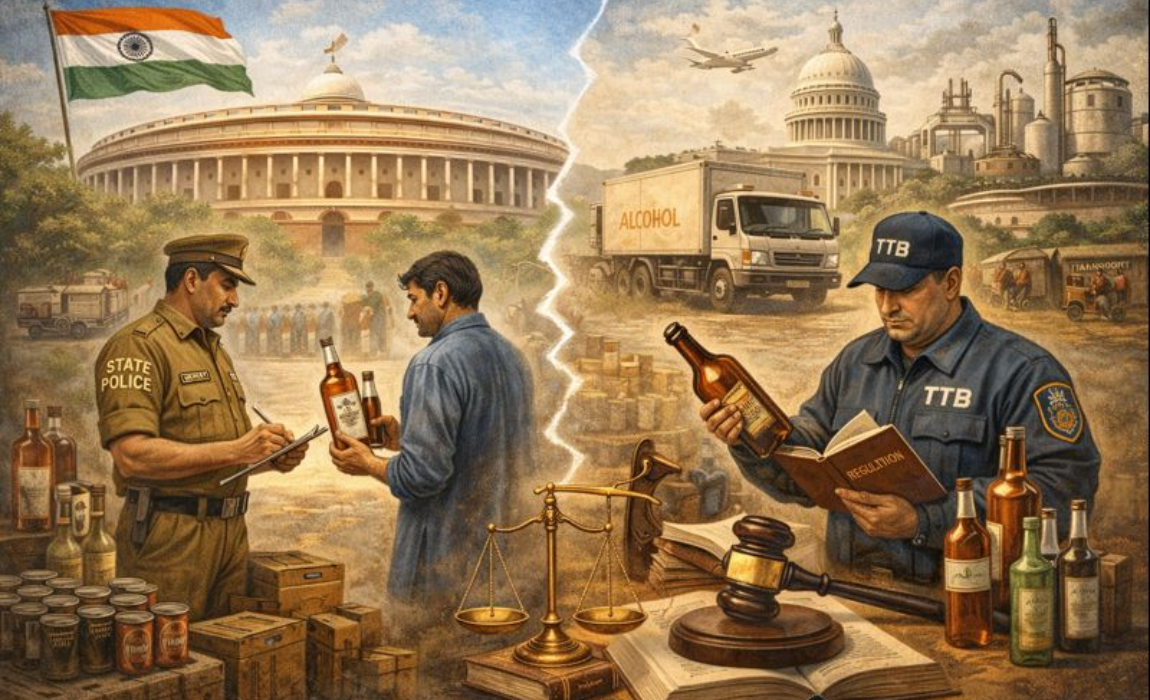
Federal Preemption of State Al Regulations
The regulation of alcohol in the United States has always been a complex issue because both the federal and state governments have a role in controlling it. While states traditionally have had the power to manage alcohol sales and distribution, federal laws sometimes override state regulations through a principle known as federal preemption. This raises important questions about the balance of power, fairness, and the proper role of government in regulating alcohol.
Federal preemption occurs when federal law takes priority over state law in areas where both governments have the authority to regulate. In the case of alcohol, this principle is often applied to ensure consistency in rules that affect interstate commerce. For example, federal laws regulate alcohol labeling, advertising, and transportation between states. If a state law conflicts with these federal standards, the federal law prevails.
This ensures that businesses operating across state lines are not faced with a patchwork of conflicting rules, which could make nationwide trade inefficient and confusing.
One example of federal preemption in action is the Alcohol and Tobacco Tax and Trade Bureau (TTB) regulations. The TTB oversees the labeling and advertising of alcoholic beverages. If a state attempts to impose stricter or contradictory labeling rules, federal law may override the state rules. This protects producers and distributors by creating a uniform standard for products sold in multiple states. Without federal preemption, companies could face different labeling requirements in every state, making compliance costly and complicated.
However, federal preemption is not without controversy. Many argue that states should have the flexibility to set their own rules based on local needs and values. Alcohol laws vary widely from state to state, reflecting cultural, religious, and social differences. For example, some states have stricter rules on alcohol sales on Sundays or limit the types of beverages sold in certain areas. Federal preemption can sometimes limit these state-specific policies, leading to tension between state governments and the federal government. Critics claim that this weakens local control and ignores the unique circumstances of different communities.
At the same time, federal preemption can promote public safety and protect consumers. For example, federal labeling laws ensure that consumers across the country have accurate information about alcohol content and health risks. Without these standards, some states might allow misleading or incomplete labels, putting consumers at risk. By overriding conflicting state regulations, the federal government can maintain a baseline level of protection for everyone, while still allowing states to enforce additional rules that do not conflict with federal law.
The balance between state authority and federal preemption is delicate. States continue to have significant control over alcohol licensing, taxation, and distribution within their borders. They can regulate the hours of sale, set minimum age requirements, and determine where alcohol can be sold. Federal preemption only applies when there is a direct conflict with federal law, which means states retain substantial influence over alcohol policy. The challenge is to respect both federal authority and state autonomy while ensuring that alcohol regulations are fair, consistent, and safe for all citizens.
In conclusion, federal preemption of state alcohol regulations is an important tool for maintaining consistency and protecting consumers, especially in matters that involve interstate commerce and safety standards. However, it must be applied carefully to avoid undermining the rights of states to manage alcohol in ways that reflect local values and needs. Striking the right balance ensures that the nation benefits from uniform standards where necessary while preserving the flexibility that allows states to address their own communities. Federal preemption should serve as a guide, not a hammer, ensuring that both state and federal interests are respected in the complex world of alcohol regulation.