
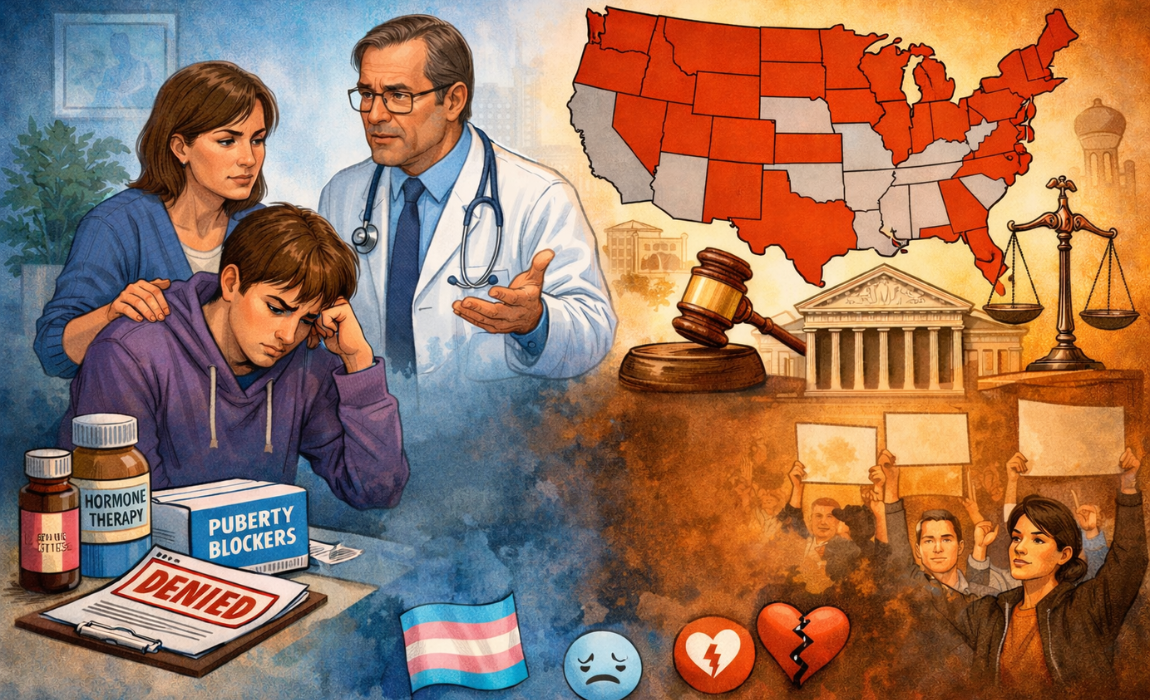
State Bans on Gender-Affirming Care for Minors
In recent years, several states have introduced laws that ban gender-affirming care for minors. These laws often prevent doctors from providing treatments such as hormone therapy, puberty blockers, or surgeries to transgender youth. Supporters argue that these bans protect children from making irreversible decisions at a young age. Critics, however, say these laws harm young people and interfere with medical professionals’ ability to provide appropriate care. Beyond the political debate, these bans raise important questions about medical ethics, parental rights, and the role of government in private health decisions.
Gender-affirming care for minors is based on guidance from major medical organizations, including the American Academy of Pediatrics and the Endocrine Society. These organizations recommend care that is appropriate for each individual child, often involving counseling, social support, and medical interventions when
necessary. Research shows that gender-affirming care can significantly improve the mental health and well-being of transgender youth, reducing rates of depression, anxiety, and suicidal thoughts. Critics of the bans argue that blocking access to these treatments ignores medical evidence and places vulnerable children at risk.
One key concern is the effect of these laws on the doctor-patient relationship. Healthcare decisions should ideally be made by doctors in consultation with patients and their families, based on the individual’s needs. When states pass blanket bans, they force doctors to ignore established medical guidelines and deny care that could be life-saving. This creates a conflict between government policy and professional medical ethics, putting doctors in a difficult position and potentially discouraging them from working in states with restrictive laws.
Parental rights are also central to this debate. In most areas of healthcare, parents have the right to make informed decisions for their children, especially regarding treatments that are considered safe and effective. State bans on gender-affirming care take away that choice, preventing parents from supporting their children’s health and well-being. Critics argue that this overreach undermines family autonomy and ignores the reality that parents and doctors often work together to make thoughtful, responsible decisions.
Supporters of the bans claim that minors are too young to make decisions about their gender and that early medical interventions are risky. While it is true that some treatments are irreversible, gender-affirming care for minors is typically carefully managed and involves stages. For example, puberty blockers are reversible and give young people more time to explore their gender identity before making permanent decisions. Blanket bans ignore these nuances, treating all cases as identical and removing important options for families.
The legal landscape is still developing. Courts have been asked to decide whether these bans violate constitutional rights, including the right to privacy, the right to bodily autonomy, and protections against discrimination. Many legal experts argue that denying medically necessary care based on gender identity could be seen as discriminatory and potentially unconstitutional. These cases highlight the tension between state power and individual rights in matters of health and identity.
In conclusion, state bans on gender-affirming care for minors raise serious ethical, medical, and legal concerns. Denying access to care can harm the mental and physical health of transgender youth, interfere with medical professionals’ judgment, and infringe on parental rights. While it is important to ensure that minors make thoughtful decisions about their health, these bans go too far by removing individualized care and ignoring expert guidance. Policymakers should focus on supporting families, respecting medical expertise, and protecting vulnerable young people, rather than imposing blanket restrictions that risk causing real harm.