
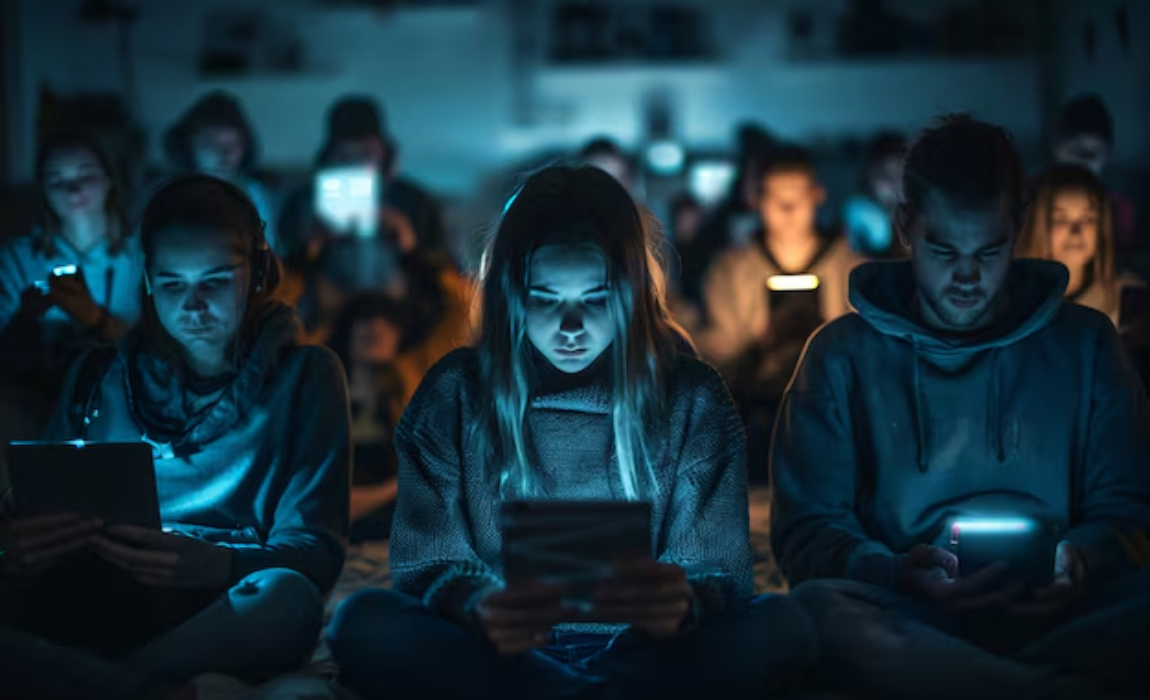
The Impact of Social Media on Society: A Boon or a Bane? -
Few inventions in recent history have transformed human behaviour as dramatically as social media. What began as a tool for staying in touch with friends has now become a powerful force shaping politics, culture, business, and even personal identity. In India, where over 800 million people use social media platforms, its influence is both undeniable and complex. The question, however, persists: is social media ultimately a blessing or a curse for society?
On one hand, social media has democratised communication like never before. It has given millions a voice—especially those who were previously unheard or ignored. From raising awareness about environmental issues to mobilising people during crises, platforms like Twitter, Instagram, and Facebook have enabled rapid information flow and collective action. We have seen ordinary citizens highlight corruption, amplify missing-person cases, and challenge injustice with a reach that
was once possible only for journalists or politicians. In this sense, social media has deepened democratic participation and empowered individuals to influence public discourse.
Social media has also opened new economic opportunities. Influencer marketing, small online businesses, digital content creation, and remote freelance work have become viable careers for many. For artists, writers, and entrepreneurs, these platforms offer visibility beyond geographic boundaries. A single viral post can transform a small business or launch a young creator’s career overnight. For a country like India—with its huge youth population—this digital economy has become a significant engine of growth.
But the darker side of social media is equally difficult to ignore. With the flood of information comes misinformation. Fake news spreads faster than facts, often leading to real-world consequences—panic during disasters, communal tensions, mob violence, and political manipulation. In a society already grappling with social divisions, viral misinformation can turn minor disagreements into major conflicts. The absence of proper digital literacy only worsens this problem.
Mental health is another growing concern. The constant pressure to appear “perfect,” the obsession with likes and followers, and the fear of missing out (FOMO) create a toxic environment—especially for teenagers. Studies across the world have shown links between excessive social media use and anxiety, depression, loneliness, and low self-esteem. The curated reality presented online often leads individuals to compare themselves unfairly, creating a sense of inadequacy that reality does not justify.
Moreover, social media has become a breeding ground for online abuse. Women, minorities, activists, and journalists often face targeted harassment, trolling, and threats. The anonymity offered by these platforms emboldens individuals to say things they would never express in person. The result is a digital space that often feels hostile and unsafe, discouraging meaningful discussions and amplifying hatred.
Politically, social media has become a double-edged sword. While it allows citizens to engage more actively in democratic processes, it also enables political polarisation. Echo chambers— where people see only content that aligns with their beliefs—reinforce biases and weaken the possibility of rational debate. Political parties across the world, including India, have used social media to influence public opinion, sometimes through coordinated campaigns and misinformation. This raises serious questions about the integrity of democratic decision making in the digital age.
So, is social media a boon or a bane? The truth lies somewhere in between. Social media mirrors society—its strengths, flaws, hopes, and frustrations. It amplifies both the good and the bad. What matters is how responsibly it is used and regulated. Governments must strengthen laws against online abuse and misinformation, platforms must prioritise transparency and accountability, and users must develop digital literacy and critical thinking.
Ultimately, social media is a powerful tool—neither inherently good nor inherently harmful. Its impact depends on how we choose to use it. If society can strike the right balance between freedom and responsibility, creativity and caution, social media can remain a boon that connects and empowers us rather than becoming a bane that divides and misleads.